GHK-Cu Peptide Therapy
Scottsdale, AZ


Supporting Skin From Within
Your skin is always working to repair itself, but this process can slow down as you age or spend years in Scottsdale’s dry, sunny climate. You might notice your skin feels thinner, takes longer to heal, or shows more fine lines and changes in hair density.
GHK-Cu is a copper peptide found naturally in the body and has been studied for its role in collagen production, skin repair, tissue remodeling, and hair follicle activity. At Blume Skin and Body, we may use GHK-Cu peptide therapy alone or as part of a larger treatment plan, depending on your skin, hair, or wellness goals. Since research on injectable GHK-Cu is still ongoing, we provide this treatment under medical supervision and with realistic expectations.
Skin quality, recovery support, and select hair or scalp concerns
Standalone therapy or an addition to another treatment
Minimal
Personalized by your provider
Gradual and dependent on your goals
Injectable GHK-Cu is not FDA-approved

Meet the Copper Peptide
GHK-Cu stands for glycyl-L-histidyl-L-lysine copper. It’s a peptide made from three amino acids attached to copper. This copper complex is naturally found in your plasma, saliva, and urine, where it helps with cell communication and tissue repair. As you get older, your body has less GHK-Cu, which is why people are interested in its possible benefits for skin, wound healing, and hair growth. While GHK-Cu can’t reverse aging, it may help support the repair processes that keep your skin looking and feeling healthier.
Helping Your Body Do the Work
Peptides are short chains of amino acids that work as messengers in your body. Each type of peptide sends different signals, so the best one for you depends on your needs. GHK-Cu is known for signaling tissue remodeling and cellular repair. Simply put, it may encourage your skin cells to keep up with collagen production, support healthy tissue, and respond to damage.
Copper is important too. It helps your body function normally and plays a role in making collagen and elastin. GHK-Cu delivers copper as part of a special signaling complex, which is different from just taking a regular copper supplement. Your provider will decide if this treatment fits your goals and create a plan based on your medical history.

Support Where You Need It
GHK-Cu works by supporting your body’s natural repair processes. Instead of giving you instant cosmetic changes, peptide therapy helps the skin improve from within over time.
Depending on your goals, GHK-Cu may help:
Results can be different for everyone, and injectable GHK-Cu is still being researched. At your consultation, we’ll talk about which benefits might apply to you and let you know if another treatment would be a better choice.
Stronger, Healthier-Looking Skin
Collagen gives skin much of its support, while elastin helps it stretch and return to place. As collagen production slows, skin can become thinner and less firm. Fine lines may remain visible for longer, and the surface can begin to feel rough or uneven.
GHK-Cu has been studied for its effects on skin fibroblasts, the cells that produce collagen and other structural materials. By supporting these cells, GHK-Cu may gradually improve skin firmness and contribute to better skin texture.
It’s important to have realistic expectations. GHK-Cu may help your skin look and feel better, but it won’t replace laser or energy-based treatments if you want to tighten loose skin. If loose skin is your main concern, your Blume provider can help you look at other options.

Extra Help When Skin Is Recovering
GHK-Cu first attracted attention because of its relationship with tissue repair and wound healing. Research suggests it may take part in the body’s response after tissue injury by supporting collagen production, immune-cell activity, and blood vessel growth.
For aesthetic patients, GHK-Cu may be a great addition to treatments that rely on a controlled healing response. Your provider may consider it alongside microneedling, MOXI, or laser skin resurfacing.
GHK-Cu is not a substitute for proper aftercare, and it should not be used on open wounds without medical advice. If it’s included in your treatment plan, we’ll go over you exactly how and when it should be used.

Healthier Environment for Growth
GHK-Cu may support hair follicles by encouraging a healthier scalp environment and helping with some of the cellular activity involved in the hair-growth cycle. It may be worth discussing if you are noticing diffuse thinning, weaker strands, or slower growth.
Hair loss can happen for many reasons, including hormones, nutrition, thyroid health, stress, medications, and genetics. Peptide therapy won’t fix an underlying problem that hasn’t been found, and it isn’t a proven substitute for standard hair-loss treatments.
Depending on what we find, GHK-Cu may be used alone or as part of a plan that includes PRF Hair Treatment or another appropriate option.
Better Fit for Gradual Change
GHK-Cu peptide therapy could be right for you if you want to support your skin or hair over time and know that results won’t happen overnight. It’s a good option for people who want to keep their skin healthy, help with recovery, or add to their current aesthetic routine.
Treatment may not be appropriate if you are pregnant or breastfeeding, have a copper allergy, or have Wilson disease or another condition that affects how your body processes copper.
Be sure to tell your provider about your full medical history, any medications or supplements you take, and if you have or had cancer. This information helps us decide if GHK-Cu is right for you or if another treatment would be safer.
Built Around Your Goals
We start by asking what brings you in. If you’re mainly concerned about your skin, we’ll check your skin type, sun exposure, skincare routine, and past treatments. If hair growth is your focus, we’ll talk about where you’re seeing thinning and whether other health factors might play a role.
We’ll also review your health history and current supplements. Laboratory testing isn’t necessary for every patient, but it may be useful when symptoms point to a nutritional, hormonal, or medical concern.
If GHK-Cu fits your goals, your provider will explain how it can be used alone or incorporated into a more complete treatment plan.

Small Injection, Simple Appointment
GHK-Cu is administered as a subcutaneous injection, which places the peptide in the fatty tissue beneath the skin. The needle is small, and the injection usually feels like a quick pinch.
Your provider will decide how much GHK-Cu to use, where to inject it, and how often you’ll need treatment. There’s no one-size-fits-all schedule because everyone’s needs are different. Follow-up visits help us see how you’re doing and adjust your plan if needed.
Most patients can return to their normal routine after an injection. Mild redness, tenderness, swelling, or bruising can occur around the injection site.

Making Your Treatments Work Together
GHK-Cu can be used as a standalone form of peptide therapy when the goal is to support gradual skin rejuvenation or tissue repair. It may also be added to an existing plan when another treatment is doing the more direct corrective work.
For example, a laser can target visible sun damage, while microneedling stimulates renewal within a specific treatment area. GHK-Cu may provide broader support for the repair processes that follow. For hair concerns, it may complement PRF or a home-care plan selected for your scalp and the cause of thinning.
You don’t need to combine treatments just to do more. We’ll only suggest adding something if it clearly benefits your plan.
Blume Skin & Body is committed to providing the best in cosmetic skin treatment procedures and personalized care. View our gallery of incredible results! Our team combines advanced techniques with a client-focused approach to deliver radiant, lasting outcomes. Each transformation reflects our dedication to helping you feel confident and refreshed in your own skin.
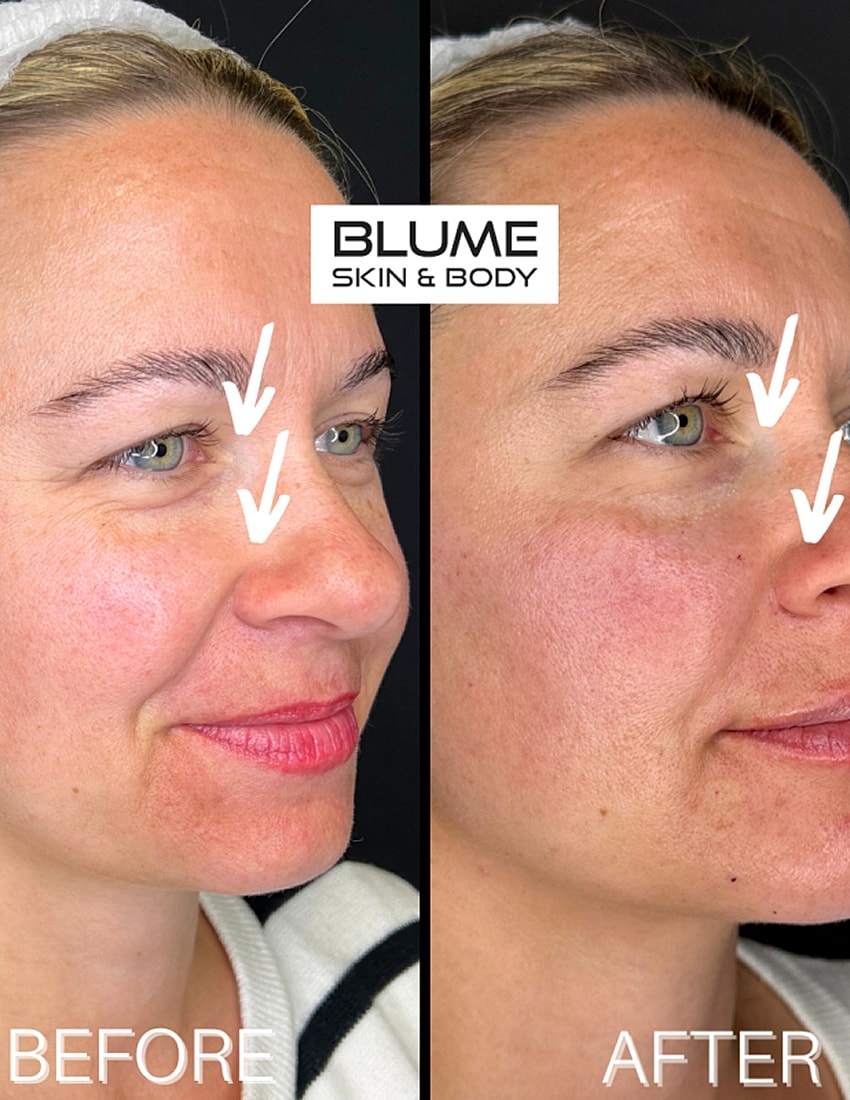
Progress Over Time
GHK-Cu results appear slowly over time. Studies on topical use have shown changes in skin tone, texture, and firmness in four to eight weeks, but there’s more research on topical GHK-Cu than on injections. We can’t promise injections will work on the same timeline.
Some people notice changes in a few weeks. Collagen-related improvements often take longer, and hair growth can take several months to see. Your age, skin type, sun exposure, health, and other treatments all play a part in your results.
A Clear Look at Safety
GHK-Cu is usually well tolerated, but injections do have some risks. The most common side effects are mild redness, swelling, tenderness, or bruising at the injection site. Since GHK-Cu contains copper, using it without supervision can raise the risk of copper overload. This is especially important if you have a copper metabolism disorder or take several copper supplements. Contact Blume if you experience persistent irritation, rash, swelling, worsening pain, or signs of infection. Seek immediate medical attention for difficulty breathing or swelling of the face or throat.
Invest in Your Skin Fitness
The price of GHK-Cu peptide therapy depends on your specific prescription, how long your plan lasts, and any follow-up visits. Costs may also change if you combine peptide therapy with other skin or hair treatments. We’ll go over all the costs with you before you start.
Skill You Can See. Care You Can Feel.
GHK-Cu is a newer treatment, so honest advice is especially important. At Blume Skin and Body, we’ll tell you what research supports, what’s still unknown, and whether peptide therapy makes sense for your needs.
Our Scottsdale team takes time to learn about your skin health, medical history, and goals before making any recommendations. We work with you personally and never pressure you to add treatments that aren’t right for you.
Contact Blume Skin and Body to schedule a consultation and learn whether GHK-Cu peptide therapy is right for you.

Yes. GHK-Cu is a naturally occurring copper-binding peptide found in human plasma, saliva, and urine. Its concentration decreases with age, although that decline doesn’t mean treatment will reverse every age-related change.
No. Injectable GHK-Cu is not FDA-approved for skin rejuvenation, wrinkle reduction, wound healing, or hair growth. Its compounding status and availability may also change, which is why current medical and pharmacy requirements must be followed.
No. Topical copper peptides work locally through the skin and have more established human research. A subcutaneous injection passes beyond the skin barrier. We cannot automatically apply the findings from topical skincare studies to injectable treatment.
There is no established timeline for injectable GHK-Cu. Some patients may notice changes in skin quality within a few weeks, while collagen remodeling and hair-related changes can take several months.
GHK-Cu may support collagen production and skin firmness, but it cannot reliably correct significant loose skin. Blume offers other treatments that may be better suited to visible laxity.
Most patients return to normal activities immediately. Mild redness, tenderness, swelling, or bruising may occur around an injection site and usually resolve on their own.